
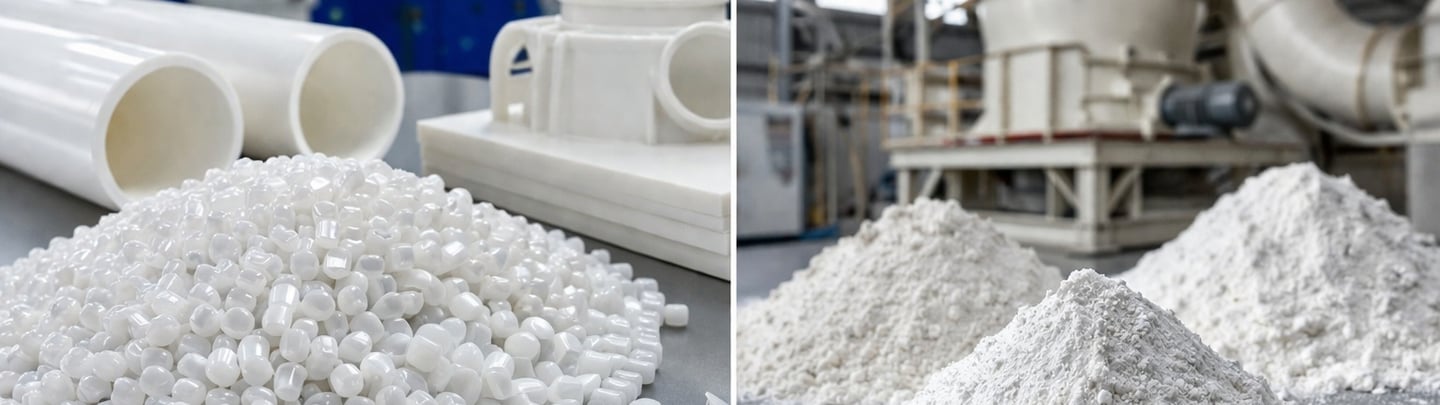
Fillers are a cornerstone of modern plastic formulation. While traditionally used for cost reduction, today they play a far more strategic role—impacting mechanical strength, thermal behavior, processing efficiency, and final product aesthetics.
In highly competitive industries like packaging, automotive, and construction, the right filler selection can directly influence profitability, product consistency, and market positioning.
Understanding Fillers: Beyond Cost Reduction
Fillers are finely divided solid materials added to polymers to modify properties. They can be categorized into:
1. Extender Fillers
Primarily used to reduce formulation cost while maintaining acceptable performance.
2. Functional Fillers
Engineered to enhance specific properties such as:
Reinforcement
Flame retardancy
Electrical insulation
Barrier properties
3. Reinforcing Fillers
These significantly improve mechanical properties by interacting strongly with the polymer matrix.
Polymer–Filler Interaction: The Core Science
The effectiveness of a filler depends on how well it interacts with the polymer matrix.
Key Mechanisms:
Interfacial Adhesion: Determines stress transfer efficiency
Particle Dispersion: Uniform distribution prevents weak points
Aspect Ratio: Plate-like or fibrous fillers perform differently than granular ones
Important Concept:
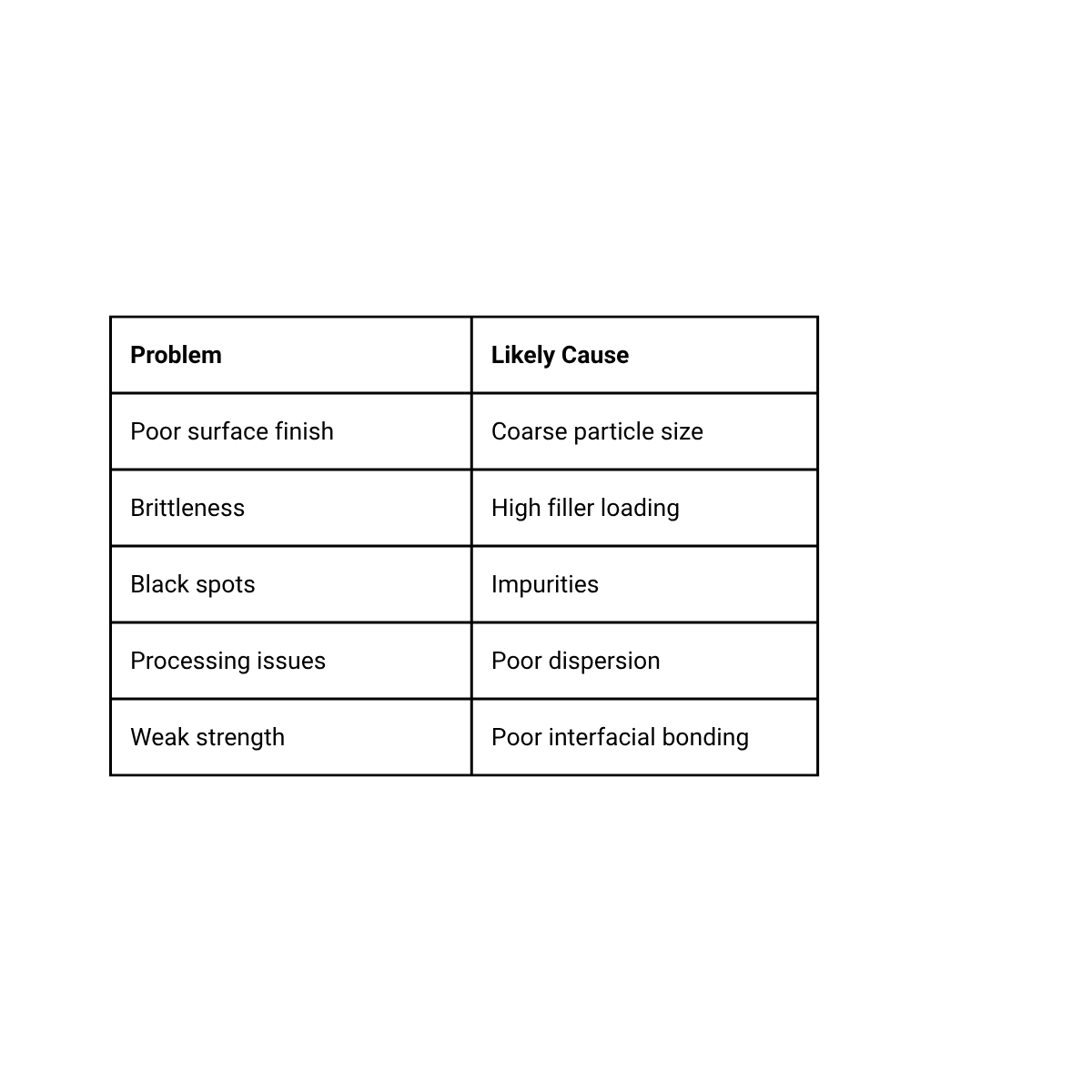
Poor bonding between filler and polymer leads to:
Reduced tensile strength
Brittleness
Surface defects
This is why surface treatment (e.g., stearic acid coating) is often used, especially for calcium carbonate.
Detailed Overview of Common Fillers
1. Calcium Carbonate (Calcite)
Forms:
Ground Calcium Carbonate (GCC)
Precipitated Calcium Carbonate (PCC)
Technical Properties:
Hardness: ~3 Mohs
Density: ~2.7 g/cm³
Oil Absorption: Low
Advantages:
Excellent cost-performance balance
Improves stiffness and dimensional stability
Enhances processability in extrusion
Limitations:
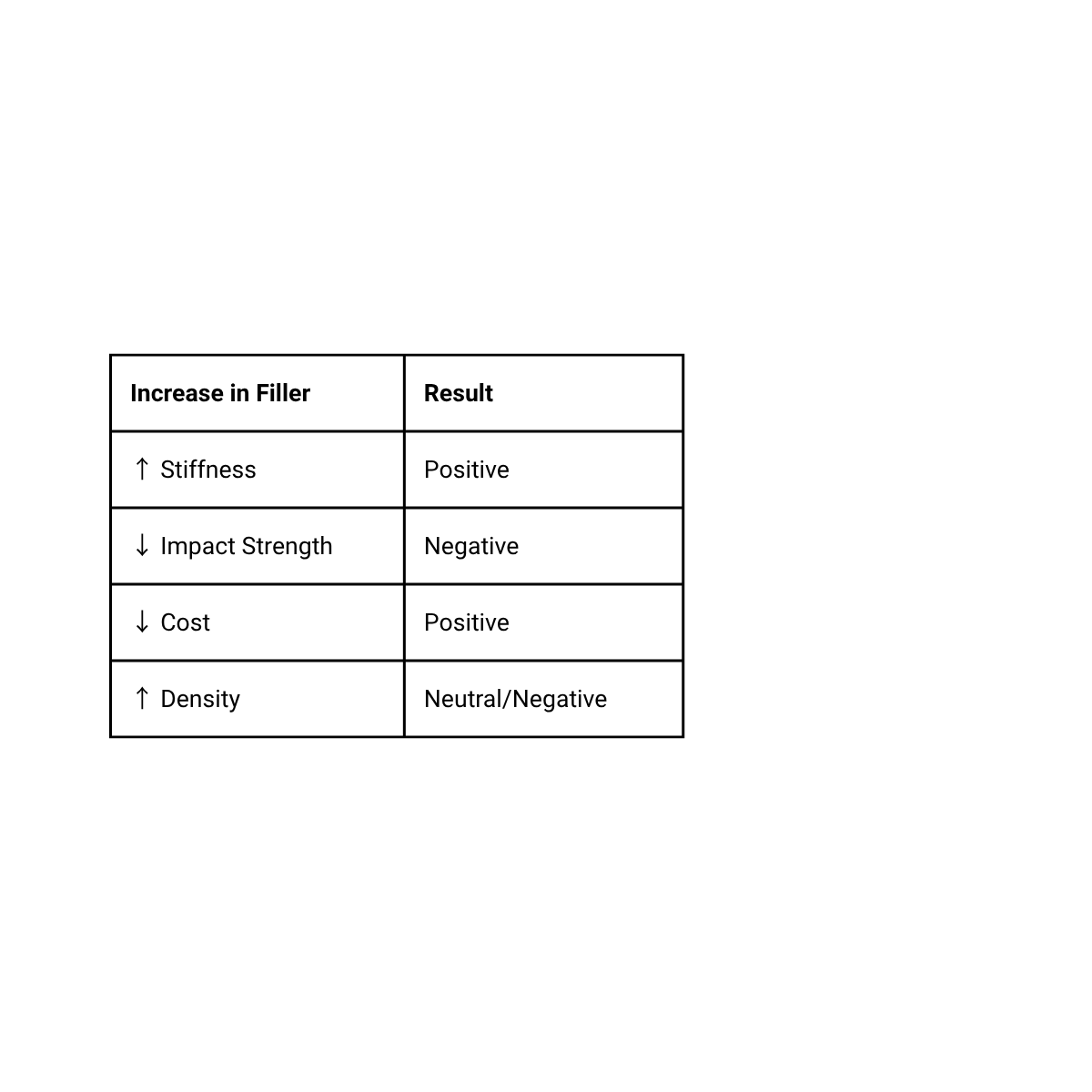
Can reduce impact strength at high loading
Applications:
PVC pipes and fittings
Blown films (LLDPE/HDPE)
Injection molding
2. Talcum Powder (Soapstone Powder)
Technical Properties:
High aspect ratio
Hydrophobic nature
Advantages:
Increases stiffness and heat deflection temperature (HDT)
Reduces shrinkage and warpage
Improves dimensional stability
Limitations:
Can reduce impact resistance
Applications:
Polypropylene (PP) automotive parts
Appliances
Compounds requiring rigidity
3. Dolomite
Composition: Calcium Magnesium Carbonate (CaMg(CO₃)₂)
Technical Advantages:
Higher hardness than calcite
Better impact resistance than CaCO₃ in some systems
Good weather resistance
Applications:
PVC profiles
HDPE pipes
Injection and extrusion products
4. China Clay (Kaolin)
Key Benefits:
Improves electrical insulation
Enhances surface smoothness
Better dispersion in certain polymers
Applications:
Wire & cable insulation
Engineering plastics
5. Silica
Forms:
Precipitated silica
Fumed silica
Advantages:
Reinforcing properties
Improves abrasion resistance
Enhances chemical stability
Applications:
High-performance plastics
Specialty compounds
Particle Size: The Most Critical Parameter
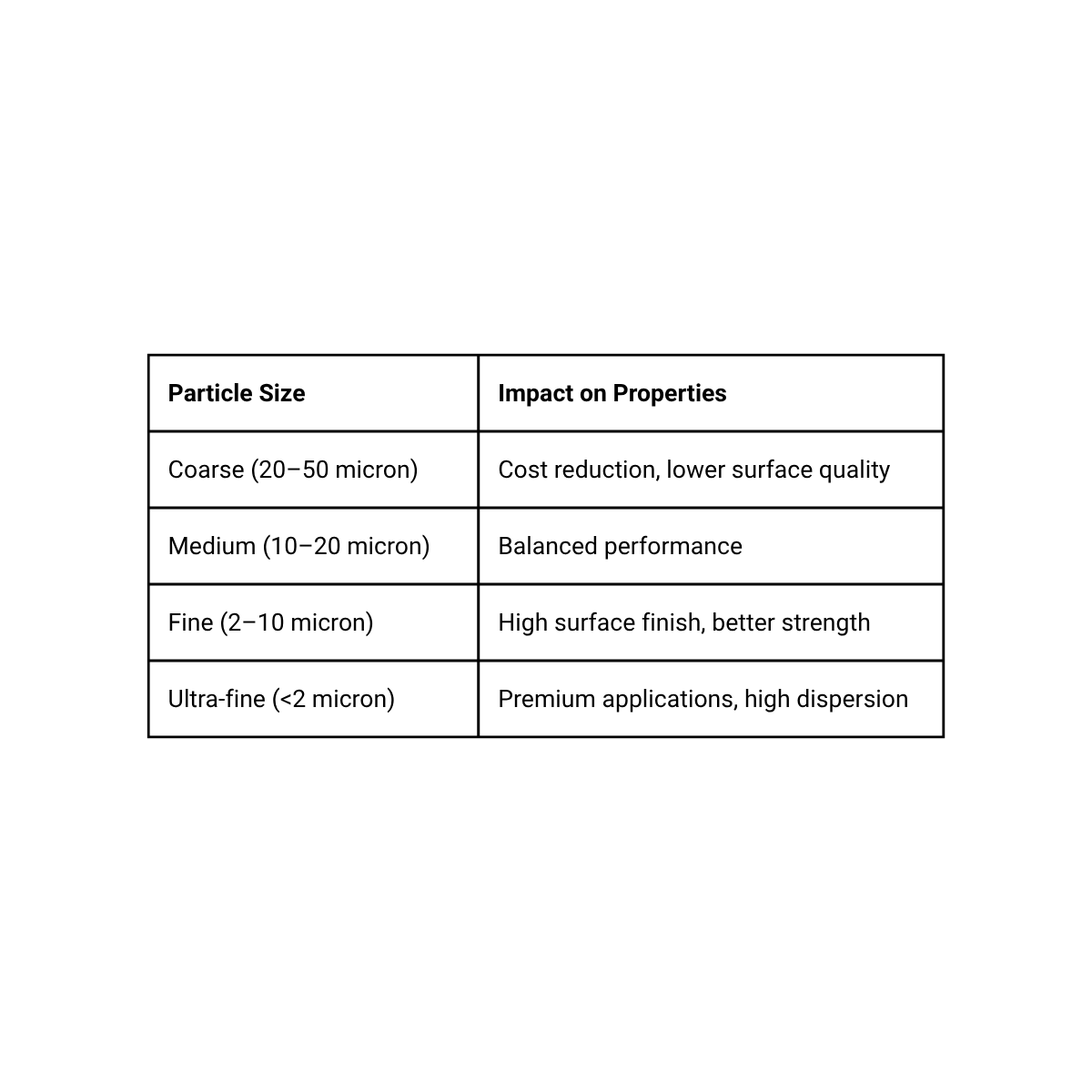
Particle size (micron level) has a direct and measurable impact on plastic performance.
General Trends:
Key Effects:
Finer particles → Higher surface area → Better bonding
Coarser particles → Easier processing, lower cost
However, finer particles may:
Increase viscosity
Require better dispersion systems
Filler Loading: Finding the Right Balance
Filler loading (%) is critical in formulation design.
Typical Ranges:
Low (5–15%) → Property enhancement
Medium (15–40%) → Balanced performance & cost
High (40–70%) → Aggressive cost reduction
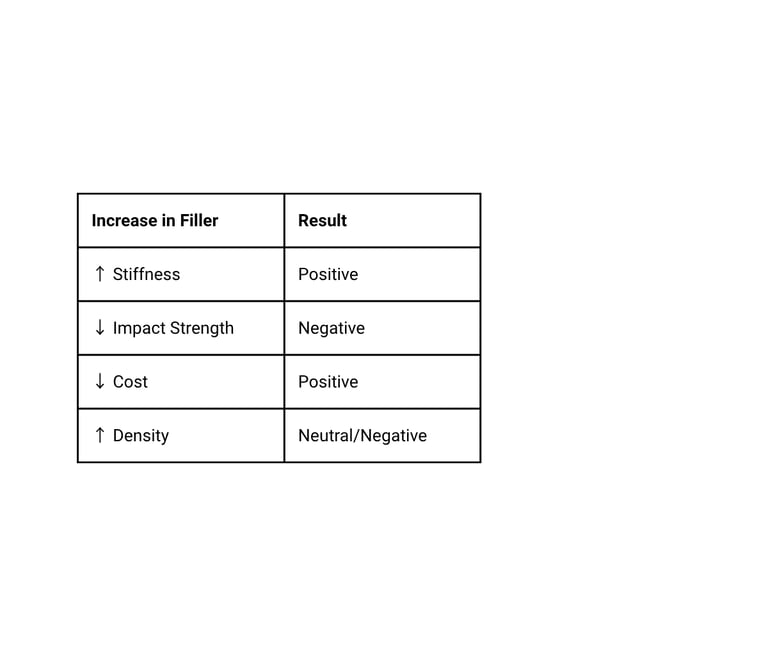
Trade-offs:
Processing Impact of Fillers
Fillers significantly affect processing behavior:
1. Extrusion
Improved output due to better heat transfer
Reduced die swell
2. Injection Molding
Lower shrinkage
Better dimensional control
3. Blow Molding
Improved bubble stability
Enhanced film properties
Surface Treatment & Modification
To improve compatibility with polymers, fillers are often treated.
Common Treatments:
Stearic Acid Coating (for CaCO₃):
Improves dispersion
Enhances hydrophobicity
Reduces moisture absorption
Silane Coupling Agents:
Improve bonding in engineering plastics
Masterbatch vs Direct Addition
Filler Masterbatch
Advantages:
Better dispersion
Dust-free handling
Consistent dosing
Direct Powder Addition
Advantages:
Lower cost
Flexible formulation
Application-Specific Filler Selection
1. PVC Pipes
High loading of calcium carbonate
Focus: Cost + rigidity
2. PP Automotive Parts
Talc preferred
Focus: Stiffness + heat resistance
3. Films (Packaging)
Fine CaCO₃
Focus: Opacity + processability
4. Wire & Cable
China clay / silica
Focus: Electrical insulation
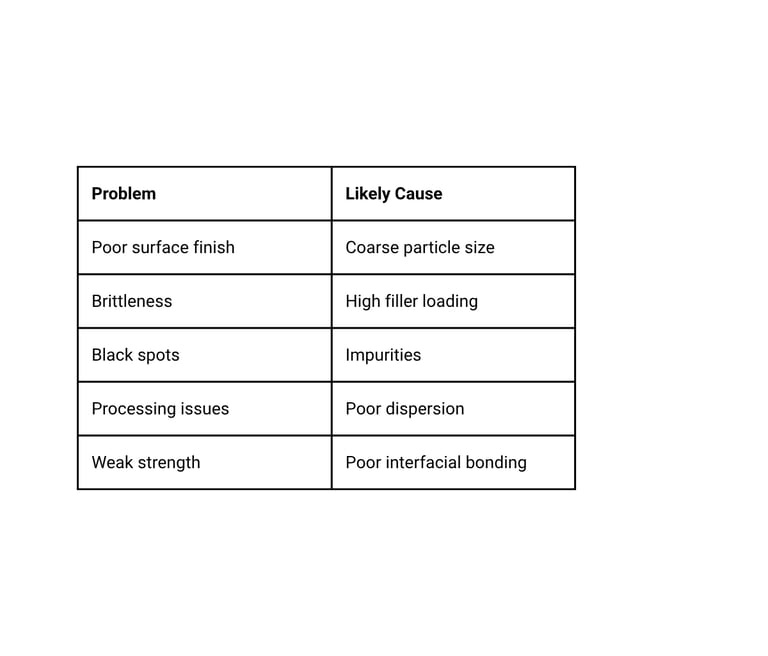
Common Problems & Their Causes
Industry Trends
Shift toward ultra-fine fillers for premium applications
Increased use of coated fillers
Demand for consistent, high-whiteness materials
Growth in plastic compounding and masterbatch industry
Why Supplier Consistency is Critical
In plastics manufacturing, even slight variations in filler quality can lead to:
Batch rejection
Processing inefficiencies
Customer complaints
Key parameters that must remain consistent:
Particle size distribution
Whiteness
Moisture content
Surface treatment quality
About Kamal Industries
At Kamal Industries, we specialize in high-performance mineral fillers tailored for the plastics industry. Our products are engineered for consistency, optimized particle size distribution, and application-specific performance.
With deep industry understanding and a focus on quality control, we help manufacturers achieve:
Lower production costs
Better product consistency
Improved processing efficiency
Conclusion
Fillers are no longer just cost-saving additives—they are strategic tools in plastic formulation. The right combination of filler type, particle size, surface treatment, and loading can dramatically improve both performance and profitability.
For manufacturers aiming to stay competitive, mastering filler selection is not optional—it is essential.
Kamal Industries
Office Address: E-446 C, Matsya Industrial Area, Alwar, Rajasthan 301030.
Factory Address:
E-446 C&D, Matsya Industrial Area, Alwar, Rajasthan 301030.
G-288, Matsya Industrial Area, Alwar, Rajasthan 301030.
© 2026. All rights reserved.
Email: kamalindalwar@gmail.com
Contact No: +919351773848